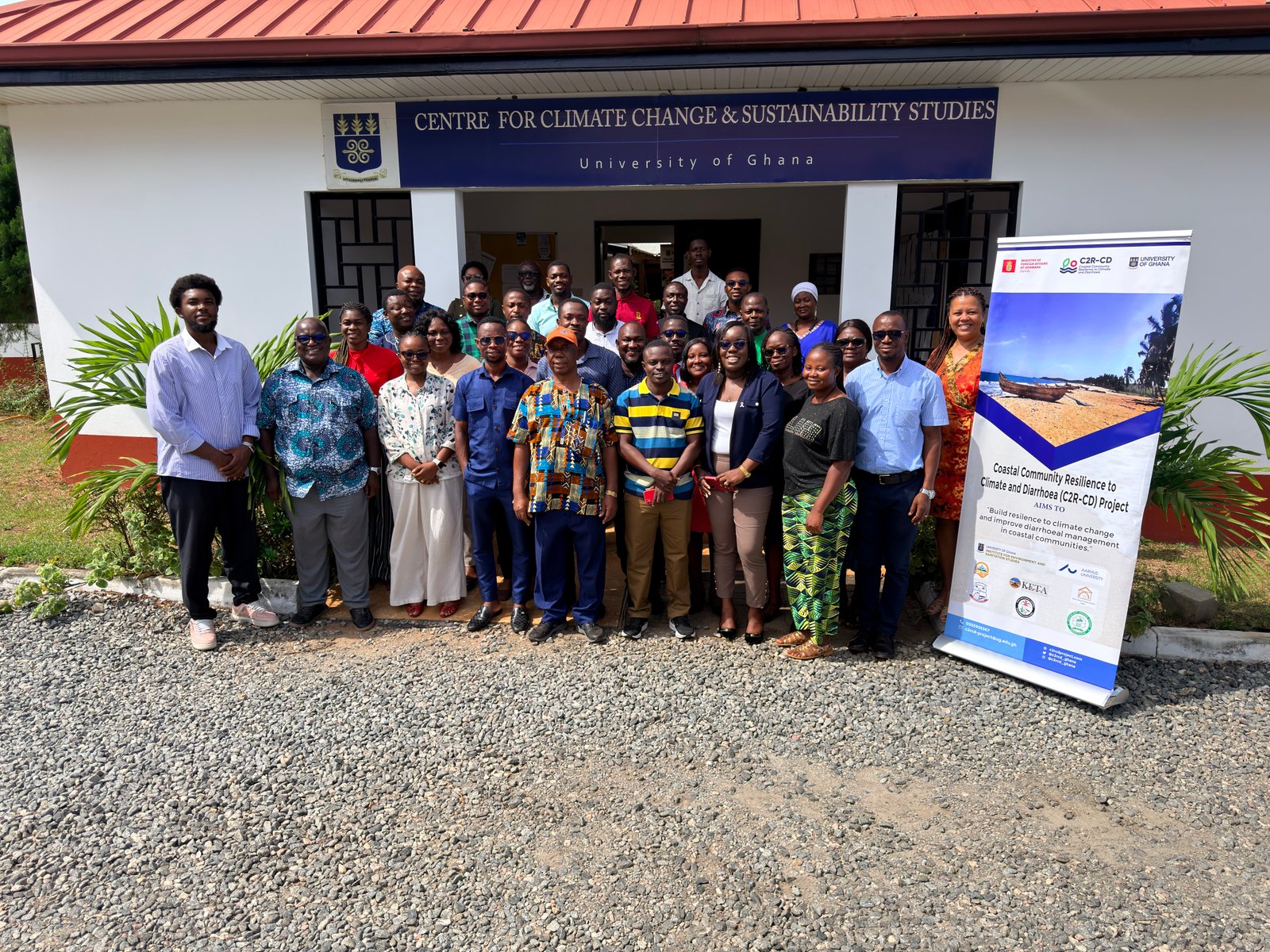
The Diarrhoea and Actionable Tools for Authorities – Community Awareness, Resilience and Engagement (DATA-CARE) project held its maiden stakeholder workshop in Accra on 7 October 2026, bringing together Health Information Officers and records personnel from eleven coastal metropolitan, municipal and district assemblies, alongside the project team from the Institute for Environment and Sanitation Studies.
The day had one purpose: to put the data back in front of the people who produce it. Professor Peter Sorensen of Aarhus University presented the analysis built from twelve years of DHIMS2 records, and participants worked through the trend curves from their own facilities, explaining what lay behind a rise in one year, a fall in another, a run of months with nothing reported at all.
That local knowledge is the part no analysis can supply. A curve can show that cases dropped after 2019; only someone working in the district knows whether a facility closed, a new one opened nearby, staff were reposted, or a water project changed something on the ground.
What was said in the room now feeds an evidence-to-action brief, which returns to participants for their comment before it goes further. The same group continues into a series of online sessions this November, where officers learn to generate and interpret district trends from DHIMS2 themselves.
Back to News & Events